What is Cloud Computing? A Beginner’s Guide☁️
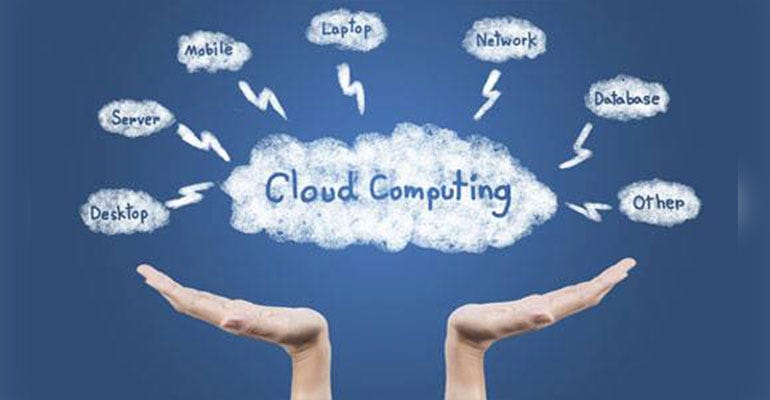
Cloud computing has revolutionized the way businesses operate, providing unparalleled scalability, flexibility, and cost-effectiveness. As technology continues to advance, understanding cloud computing is crucial for staying ahead of the curve. In this blog, we’ll delve into the fundamentals of cloud computing, exploring its benefits, types, and applications
Table of Contents📔
🧾Brief History of Cloud Computing
♨️Importance of Cloud Computing
🌐Cloud Computing Fundamentals :
1️⃣ IaaS (Infrastructure as a Service) 2️⃣PaaS (Platform as a Service) 3️⃣ SaaS (Software as a Service)
⭐Cloud Deployment Models — Public Cloud — Private Cloud — Hybrid Cloud — Community Cloud
🏛️Cloud Computing Architecture
🧩What is Cloud Computing?
Cloud computing in simple words is a model of delivering computing services over the internet, where resources such as servers, storage, databases, software, and applications are provided as a service to users on-demand.
🧾Brief History of Cloud Computing
Cloud computing’s roots date back to the 1960s, with Douglas Parkhill’s “Computer Utility” concept and J.C.R. Licklider’s “Intergalactic Computer Network.” The 1990s saw the internet’s widespread adoption and VMware’s virtualization software. In the 2000s, cloud computing emerged with Amazon Web Services (AWS) in 2002, Google Docs & Spreadsheets in 2006, IBM Blue Cloud in 2007, and Microsoft Azure in 2008. By the 2010s, cloud computing became mainstream, with OpenStack’s launch in 2011, AWS Glacier storage in 2012, and Google Compute Engine in 2013. Today, cloud computing dominates, with hybrid/multi-cloud strategies, edge computing, AI, and IoT integration, led by key players AWS, Microsoft Azure, Google Cloud Platform, IBM Cloud, and Salesforce.
♨️Importance of Cloud Computing

Cloud computing is crucial for businesses and individuals alike, offering strategic, economic, operational, technological, and social benefits. It enables business agility, competitive advantage, and digital transformation while reducing costs and increasing efficiency. Cloud computing ensures reliability, security, and collaboration, and facilitates innovation, data analytics, and integration. With 94% of enterprises adopting cloud computing, the market is projected to reach $820B by 2025. Real-world examples like Netflix, Amazon, and Microsoft demonstrate cloud computing’s scalability, flexibility, and productivity benefits. By leveraging cloud computing, organizations can enhance remote work, accessibility, and education, ultimately driving growth and success in today’s digital landscape.
🌐Cloud Computing Fundamentals :
Cloud computing is built on a foundation of key concepts and technologies that enable scalable, on-demand access to computing resources. At its core, cloud computing combines virtualization, distributed computing, and networking to provide flexible and efficient infrastructure, platforms, and software services. Understanding cloud computing fundamentals is crucial for harnessing its full potential. This section explores the essential components, including Infrastructure as a Service (IaaS), Platform as a Service (PaaS), Software as a Service (SaaS), and cloud deployment models, providing a solid base for navigating the cloud landscape.”
1️⃣ IaaS (Infrastructure as a Service):
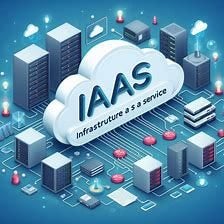
Infrastructure as a Service (IaaS) provides virtualized computing resources, such as servers, storage, and networking, over the internet. With IaaS, users manage their infrastructure, installing and configuring operating systems, software, and applications. IaaS offers scalability, flexibility, and cost-effectiveness, allowing businesses to quickly provision and deploy resources as needed. Key characteristics include:
- Virtualized servers and storage
- Scalable resources
- Pay-as-you-go pricing
- User-managed infrastructure
- High customization
Examples: Amazon Web Services (AWS), Microsoft Azure, Google Compute Engine
2️⃣PaaS (Platform as a Service):
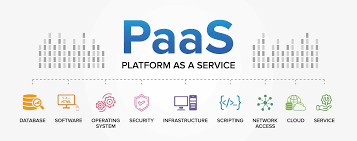
Platform as a Service (PaaS) provides a complete platform for developing, running, and managing applications, including tools, libraries, and infrastructure. PaaS enables users to focus on application development, without worrying about underlying infrastructure. Key characteristics include:
- Pre-configured development environments
- Integrated tools and libraries
- Automated deployment and scaling
- Managed infrastructure
- Support for multiple programming languages
Examples: Heroku, Google App Engine, Microsoft Azure App Service, AWS Elastic Beanstalk.
3️⃣ SaaS (Software as a Service):
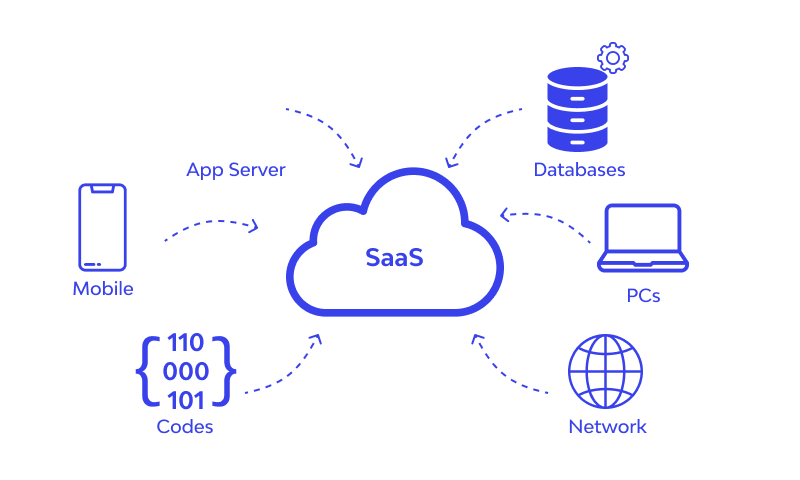
Software as a Service (SaaS) delivers software applications over the internet, eliminating the need for local installation and maintenance. SaaS providers manage infrastructure, security, and updates, allowing users to access applications through a web browser or mobile app. Key characteristics include:
- Cloud-based software applications
- Subscription-based pricing
- Automatic updates and maintenance
- Scalable and secure
- Accessible from anywhere
Examples: Salesforce, Microsoft Office 365, Google Workspace, Dropbox.
IaaS vs PaaS vs SaaS:
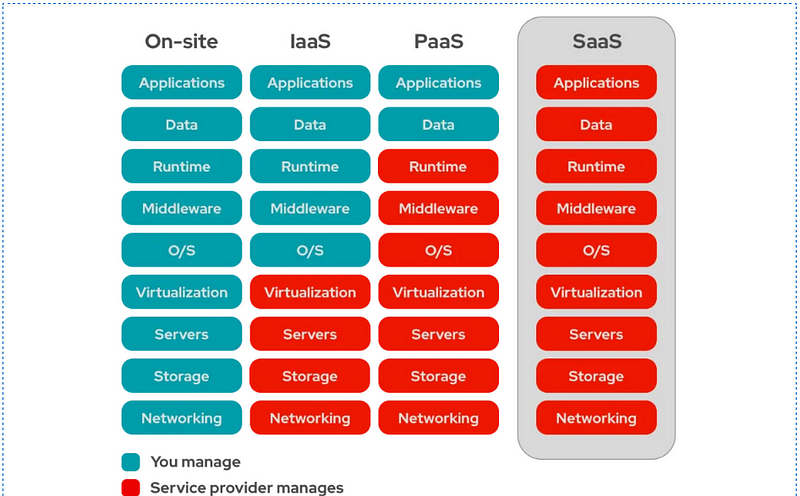
This Image itself is enough to know the difference between IaaS vs PaaS vs SaaS as it is simple to understand and covers every field.
⭐Cloud Deployment Models
Cloud deployment models define how and where cloud resources are allocated. The main models are:
1. Public Cloud: Shared infrastructure, open access (e.g., AWS, Azure).
2. Private Cloud: Dedicated infrastructure, restricted access (e.g., enterprise data centers).
3. Hybrid Cloud: Combination of public and private clouds.
4. Community Cloud: Shared infrastructure among organizations with similar interests.
🌨️Public Cloud
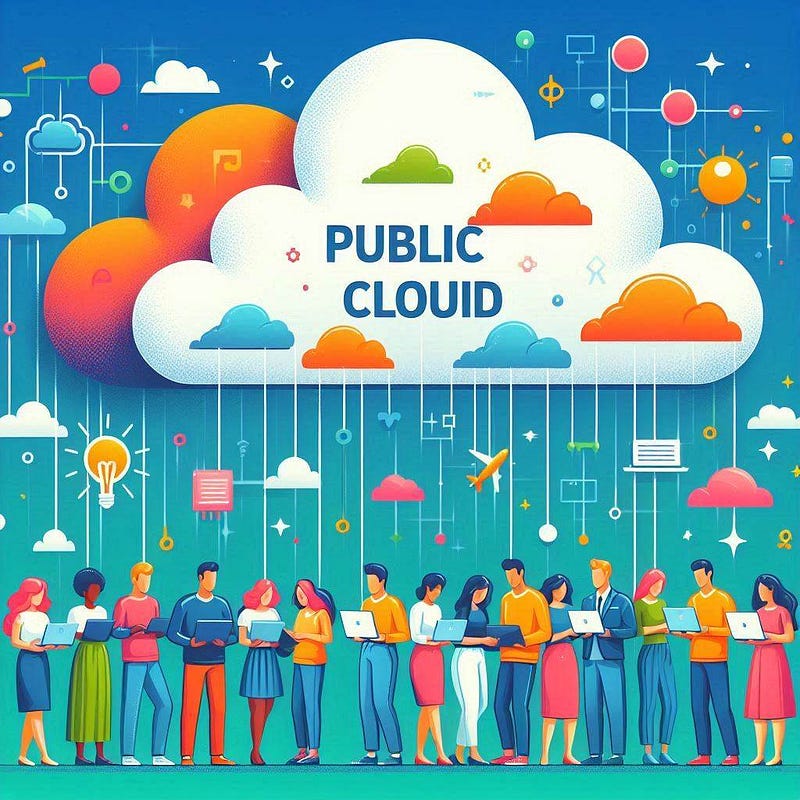
A public cloud is a shared, multi-tenant infrastructure open to the public, offering scalability, on-demand self-service, and pay-as-you-go pricing. Benefits include cost-effectiveness, rapid deployment, reduced maintenance, and access to advanced technologies. Ideal for web applications, big data analytics, IoT, SaaS, and development environments. Leading providers include Amazon Web Services (AWS), Microsoft Azure, Google Cloud Platform (GCP), IBM Cloud, and Oracle Cloud. While offering lower costs, increased agility, and improved reliability, public clouds also raise security concerns, data sovereignty issues, and dependence on internet connectivity.
🌐Private Cloud

A private cloud is a dedicated, single-tenant infrastructure, typically managed within an organization’s premises or by a third-party provider. It offers enhanced security, control, and customization, with resources solely allocated to one organization. Private clouds cater to businesses requiring strict data sovereignty, compliance, and regulatory adherence. Benefits include improved security, scalability, and flexibility, reduced risks, and customized infrastructure. Ideal for finance, healthcare, government, and enterprises with sensitive data. Key characteristics include dedicated infrastructure, single tenancy, centralized management, and customized security.
📔Hybrid Cloud

A hybrid cloud combines public and private cloud infrastructure, enabling seamless integration and data portability between the two. This model allows organizations to leverage the scalability and cost-effectiveness of public clouds while maintaining sensitive data and applications within private cloud or on-premises infrastructure. Hybrid clouds offer flexibility, improved security, and optimized resource utilization. Benefits include enhanced collaboration, increased agility, and better disaster recovery. Ideal for enterprises requiring scalability, security, and compliance, such as finance, healthcare, and government institutions. Key characteristics include integrated public and private clouds, centralized management, data portability, and scalable architecture.
🌐Community Cloud
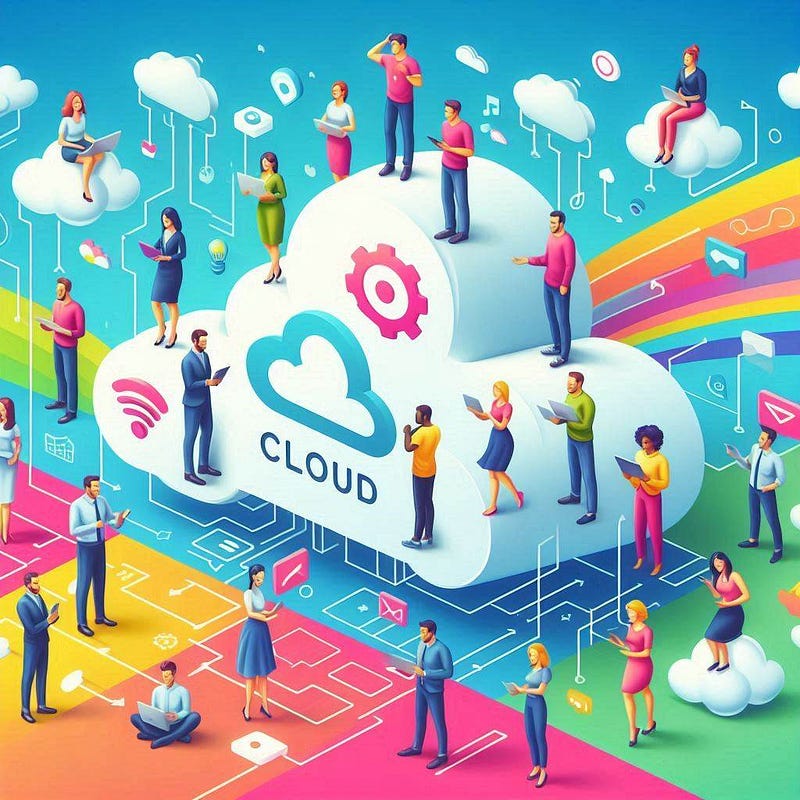
A community cloud is a shared infrastructure designed for specific industries or organizations with similar interests, security requirements, or compliance needs. This collaborative model enables member organizations to share resources, reduce costs, and enhance security. Community clouds are typically managed by the participating organizations or a third-party provider. Benefits include:
-Enhanced security and compliance
- Improved collaboration and knowledge sharing
- Reduced costs through shared resources
- Customized infrastructure and services
There are some more types of cloud like Multi cloud and edge cloud I will leave that for you all to explore.
🏛️Cloud Computing Architecture
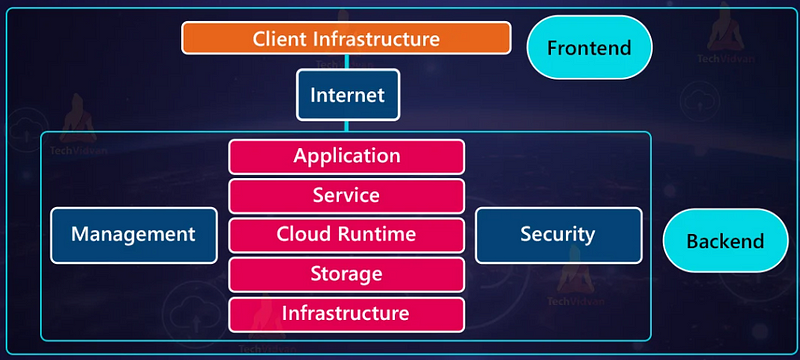
Cloud computing architecture refers to the design and structure of cloud-based systems, comprising hardware, software, and networking components. Imagine a layered cake:
Front-end (User Interface): Web or mobile apps, browsers, or custom interfaces.
Back-end (Cloud Infrastructure): Virtualized servers, storage, databases, and networks, managed by cloud providers (AWS, Azure, Google Cloud).
Middle-ware (Platform): Operating systems, frameworks, and libraries enabling communication between front-end and back-end.
Infrastructure (IaaS): Virtual machines, storage, and networking resources.
Applications (SaaS): Software applications, like email or productivity tools.
Deployment Models: Public, Private, Hybrid, or Community clouds.
Service Models: IaaS (Infrastructure), PaaS (Platform), SaaS (Software).
This architecture enables scalability, flexibility, and on-demand access to computing resources, allowing users to focus on their applications and data, while the cloud provider manages the underlying infrastructure.
🧃Cloud Computing Benefits

Cloud computing offers numerous benefits, including cost savings, scalability, and increased efficiency. It enables businesses to reduce infrastructure and maintenance costs, pay only for used resources, and scale up or down as needed. Cloud computing also provides automatic software updates, enhanced collaboration, and real-time data sharing. Additionally, it offers improved reliability, flexibility, and disaster recovery, as well as advanced security measures and competitive advantages. With cloud computing, businesses can simplify management, reduce risk, and improve mobility, accessing resources from anywhere, on any device. Furthermore, cloud computing promotes environmental sustainability, unlimited storage, automatic backup and recovery, and seamless integration with emerging technologies like AI, IoT, and Blockchain.
🌐Applications
Cloud computing has diverse applications across industries. Businesses utilize cloud-based CRM, ERP, accounting, and HRM systems. Productivity tools like Google Workspace, Microsoft 365, Slack, and Trello enhance collaboration. Data analytics and science applications include data warehousing, business intelligence, predictive analytics, machine learning, and data visualization. E-commerce platforms, inventory management, and digital payments transform retail. Healthcare and education leverage electronic health records, medical imaging, learning management systems, and online courses. Media and entertainment stream video, music, and online gaming. Governments utilize citizen services, public records management, emergency response systems, and smart city initiatives. Other applications include cloud storage, backup and recovery, security, IoT, and AI. These applications demonstrate cloud computing’s versatility in transforming industries and revolutionizing work, life, and interaction.